Energy Conservation Tips for Homes and Workplaces
LIGHTING
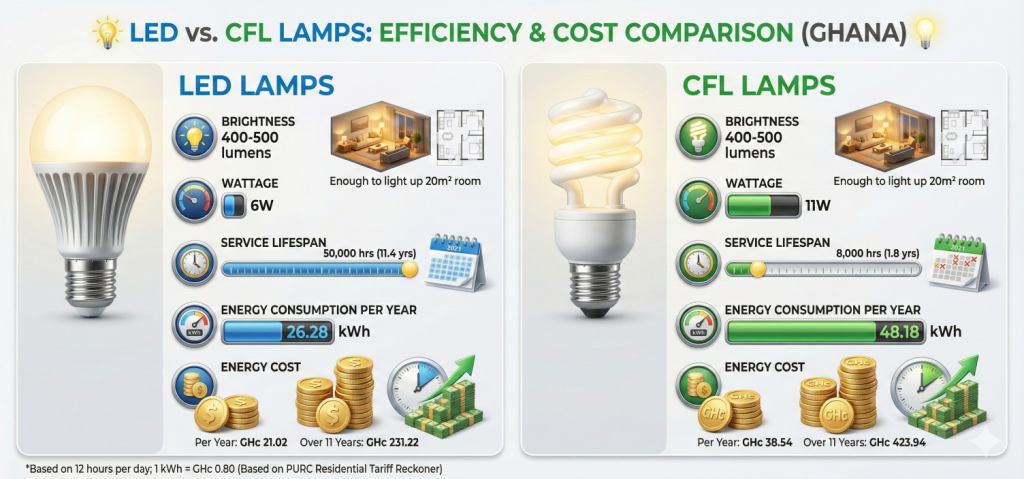
- LED lamps use about 75% less energy than other traditional light bulbs. This means that LED bulbs are incredibly efficient.
- Keep light fixtures and lamps clean and dust free. Dust layers on your bulb can absorb as much as 30% of the needed brightness.
- Select lamps with enough brightness for the intended purpose.
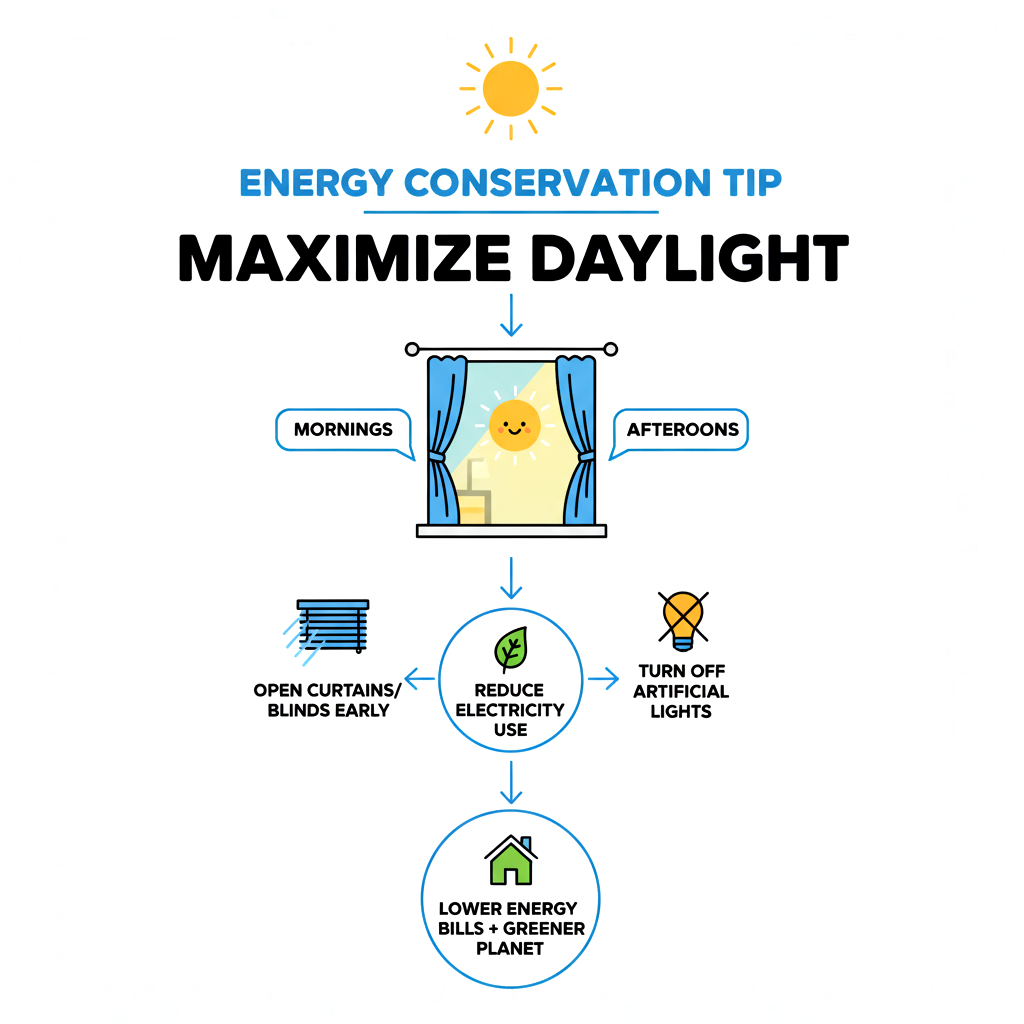
- Make maximum use of daylight.
- Switch off lights in rooms, toilets, bathrooms when not in use.
- For offices with low occupancy rates, install simple electronic controls such as PIR Sensors (Passive Infrared Sensor). They ensure that lights are automatically switched off when rooms are not occupied for more than a predetermined period.
- Too many outside lights do not necessarily provide security. Infrared Sensors or motion detectors are a more energy efficient solution.
- Get expert advice when designing the lighting system for your building. Don’t use more lighting than recommended for a task space. Save energy through expert advice.
- Light-colored wall reflects better than darker walls. White for instance is a good reflector of light.
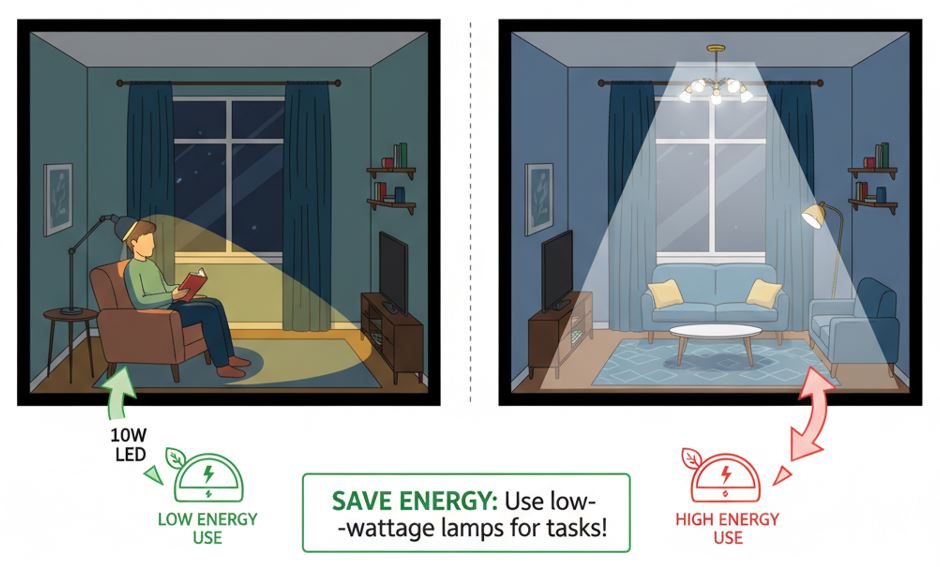
- You can save energy by using low-wattage table lamps for reading rather than using general lighting.
- You can use corner Lamps rather than ceiling mounted lights to increase the illumination in your room by reflection from three surfaces instead of one. This is more energy efficient.
- When it’s time for lighting replacement;
- Replace CFL and halogen lamps with LED lamps.
- Replace fluorescent lamps with linear LED lamps.
REFRIGERATORS & FREEZERS
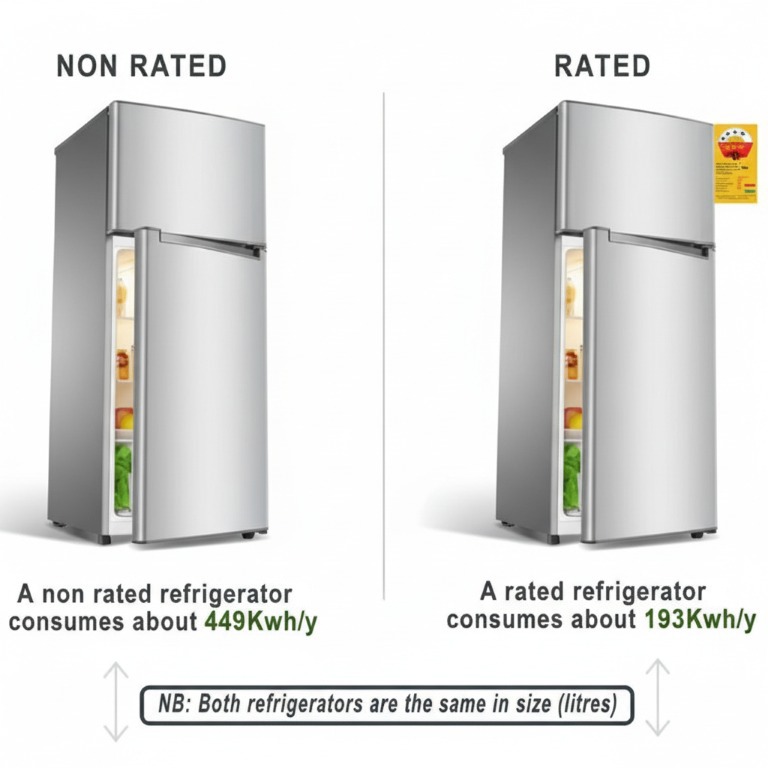
- When purchasing a new refrigerator/freezer, it is worth considering a high efficiency model. Efficient models usually have efficiency labels to aid identification. E.g., the Ghana Standard Authority Energy Guide identifies efficient products imported into the country. Ask the vendor to show you the efficiency label, otherwise seek expert advice.
- The more stars on the energy guide label the better.
- In a situation where the refrigerator/freezer compressor needs to be replaced, you could use energy efficient compressor motors. Seek expert advice.
- A full freezer works more efficiently than a nearly empty one. Fill up unused space with plastic bottles filled with water. Be careful not to block the fan that allows cold air to circulate.
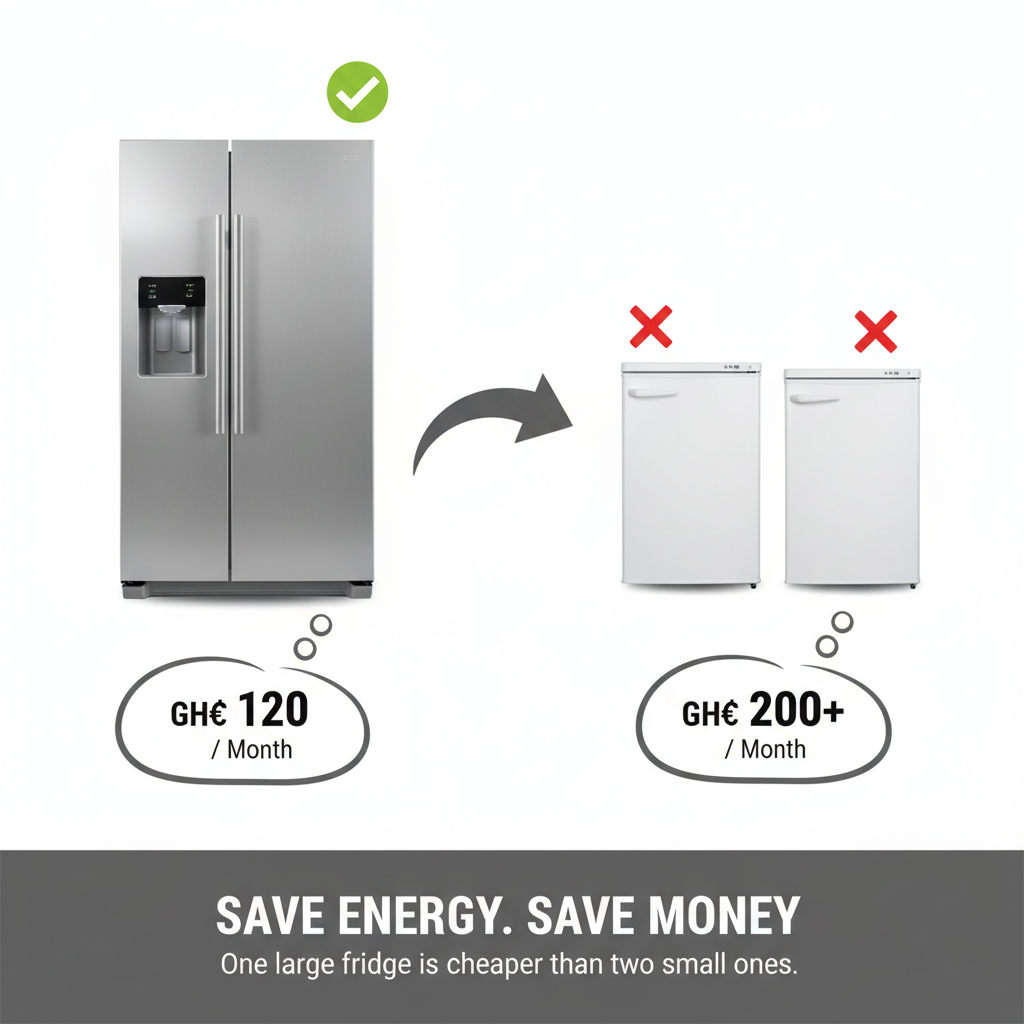
- It is cheaper to run one big refrigerator than two small ones.
- Decide what you want before opening the fridge/freezer.
- By developing the habit of keeping items in the same place all the time in a fridge/freezer you minimize the amount of time it remains open and thus save energy.
- You can label items in your fridge/freezer and minimize the amount of time it remains open.
- Uncovered foods release moisture and make your fridge/freezer work harder and thus use up more energy.
- You can replace inefficient seals and cut down your bills. Check that second-hand fridge/freezer you are planning to buy for dirt, cracks, breaks, and brittleness in the rubber seal.
- It is not economical to buy a cheap second-hand fridge/freezer that is not energy efficient. Be sure it is energy efficient or you will pay for the inefficiency through higher energy bills.
- Choose the right size for the family.
- Don’t put hot foods and drinks in the fridge/freezer.
- Avoid placing freezers/refrigerators too close to the walls or in the corners;
- Allow a space of about 4-6 inches between the wall and the fridge for adequate ventilation of the coils at the back.
- Clean the coils at the back of the refrigerator as often as possible. Dirt build-up makes the refrigerator waste energy.
- Keep the refrigerator door seal clean and air tight.
- Test the seal around the door of fridges/freezers by closing the door on a thin strip of paper, ensure that the paper is tightly gripped and does not slide easily. If it does, then the seal is worn out and needs to be replaced.
- Instead of using the microwave oven, defrost your frozen food in the fridge.
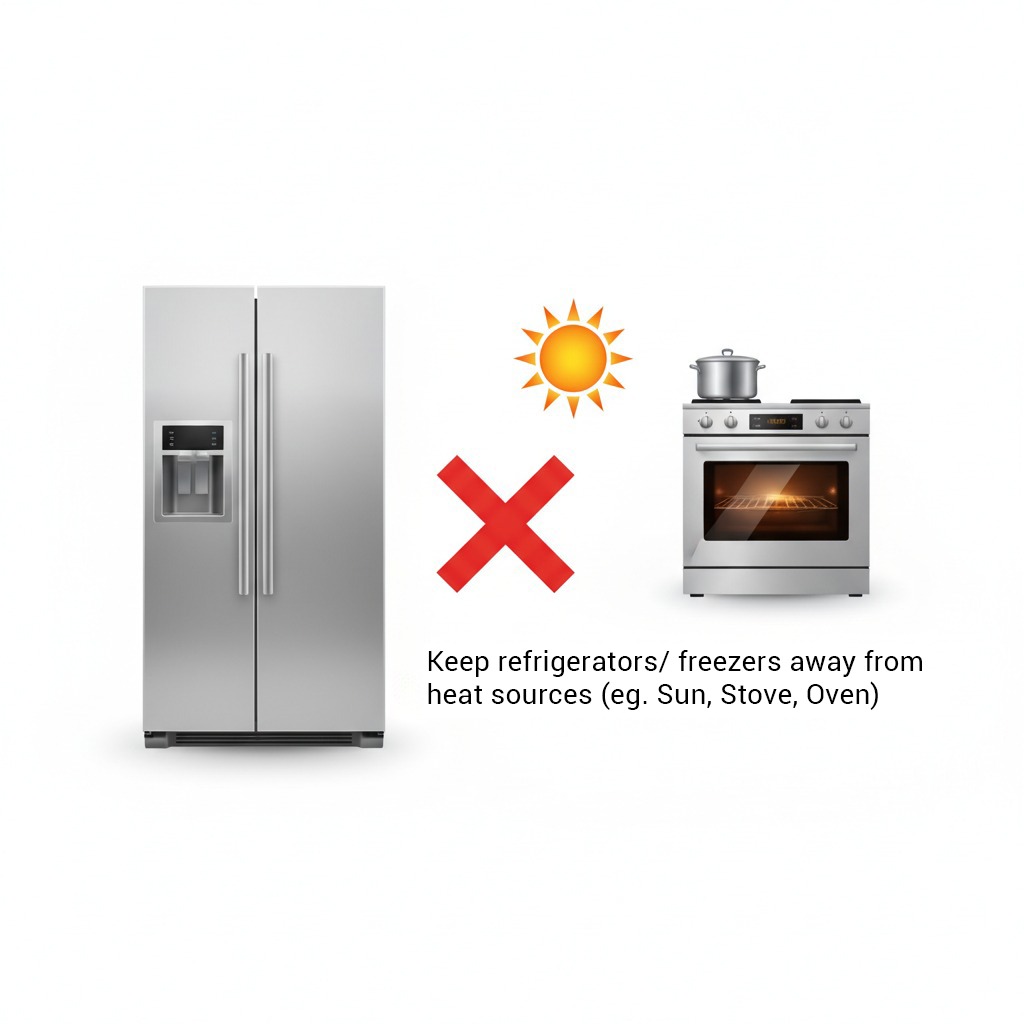
- Keep refrigerators/freezers away from heat sources e.g., Sun, stove, oven.
- Unplug and defrost the freezer compartment regularly since ice build-up causes excessive electricity wastage.
- Manually defrosting freezers use less electricity than automatic ones. This is provided the ice is not thicker than 6mm before defrosting.
- Refrigerators with freezers on top(top-mounted) save more energy than ‘side by side’ models.
- The top loading chest type freezer (chest freezer) is between 10-25% more efficient than the front load upright freezer. This is because when the door is open, the cold air stays inside rather than spill out.
- By regulating your fridge effectively, you could save enough.
- 1 to 5 degrees Celsius for fresh food.
- 5 degrees Celsius for freezing.
- 0 degrees Celsius for long term storage.
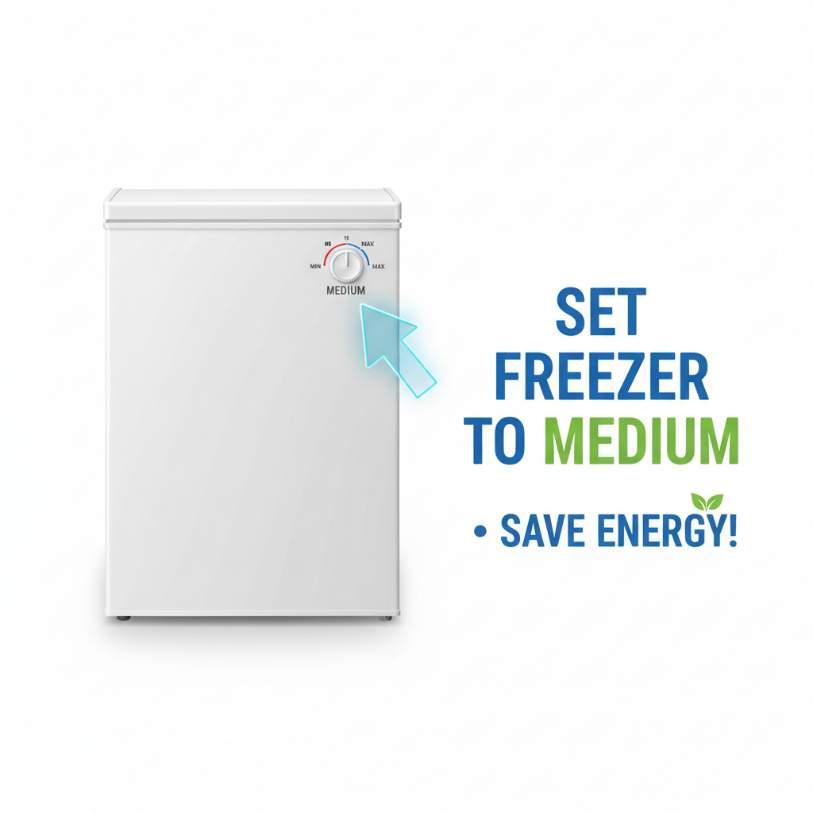
By setting your freezer regulator at medium or midway between the max and minimum settings you save energy
AIR CONDITIONERS
- Always buy air conditioner with an energy efficiency label (Energy Guide).
- The more stars the better.
- It is energy efficient to size your air-conditioner according to the size of and use of the space you are cooling. Consult the experts.
- It is energy efficient to properly regulate the temperature in your room/office, do not overcool the space.
- By locating your AC units on the north and south sides or the best shaded side of your building you cut down on your bills.
- Its is not energy efficient to cool unoccupied rooms.
- By switching the air conditioner off when leaving the room for more than 10 minutes you save lots of energy.
- For your air conditioner to work more efficiently, you should avoid placing objects in front of the unit, it blocks vents and reduces the unit’s ability to properly exhaust air.
- A ceiling fan or standing fan uses about 10% of the energy and the air conditioner utilizes.
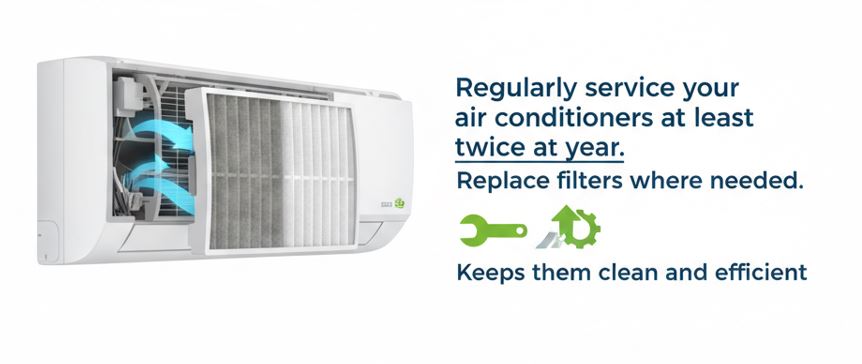
- Regularly service your air conditioners at least twice a year, replace filters where needed. This keeps them clean and efficient.
- Open doors and windows to refresh the room before switching on the air conditioner.
- Replace air conditioners that are very old with new and more efficient ones.
- Shade or tint your window from outside against direct sun light and heat
- Keep windows and doors shut while using air conditioner.
- Don’t set the temperature of you’re A/C below 25o Celsius – it is healthier for you, your electricity costs and the environment!
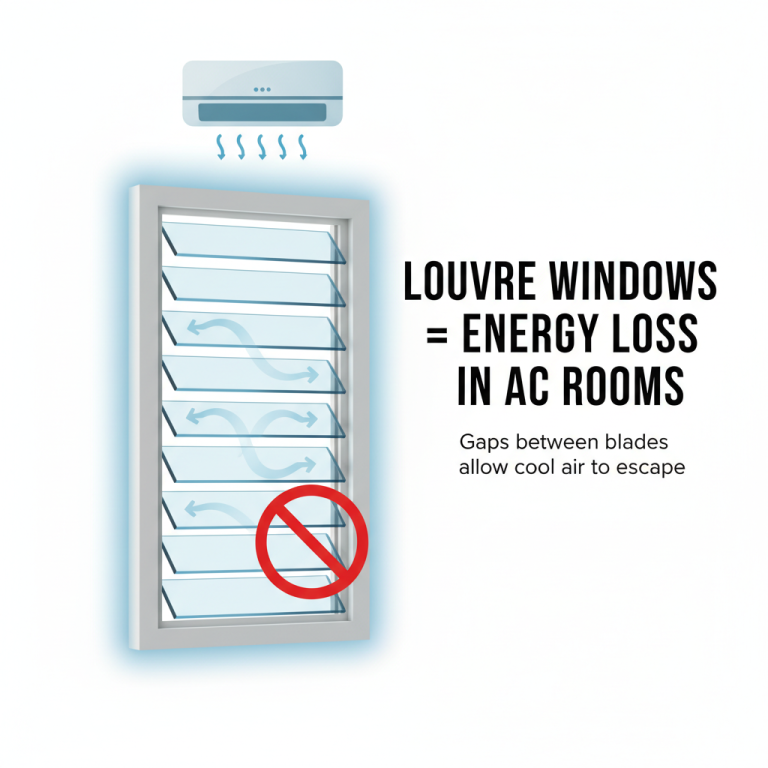
- Louvre windows are not the best for air-conditioned rooms because of gaps between the blades.
- However, if you use louvre windows keep them firmly closed.
OFFICE EQUIPMENT
- By setting your computer to go to sleep instead on relying on conventional screen savers you drastically cut down your bills.
- Make sure your computer is turned off at night and on weekends.
- Experiment with your delay setting to achieve the shortest possible time that is acceptable before your computer automatically goes to sleep.
- AC-DC convertors for external computer speakers, external disk drives, modems, network hubs etc. consume energy even though the actual device may be off. Always turn the switch off and unplug them.
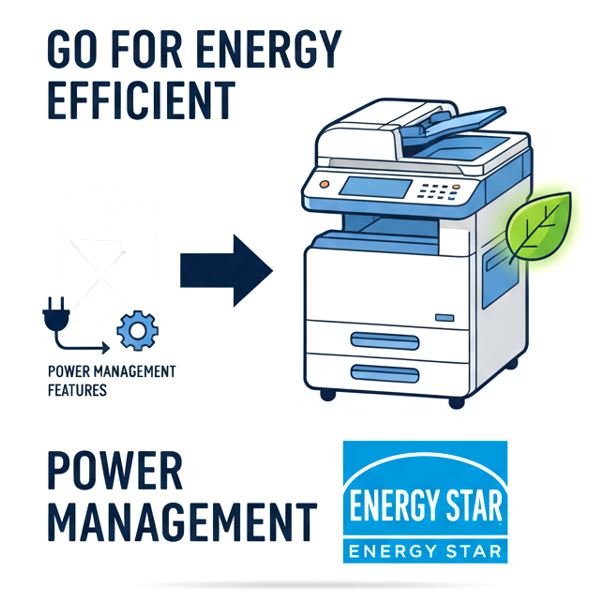
- When buying a new copier, go for an energy efficient model with power management features.
- By turning a copier on only when you need it you save energy. Do not leave it on the whole day.
- It is energy efficient to run copies in batches decreasing the time your copier spends in high power mode.
- If your copier has a duplex feature, you can set it to automatically default to making one to two sided copies and thus save energy.
Printers are equipped with a power management feature that can reduce energy costs by more than 50%. Choose this option.
325
Revenue in 2017 (Million)
525
Colleagues & Counting
302
Successfully Project
55+
Years of experience
Trust and Worth
Our Supports